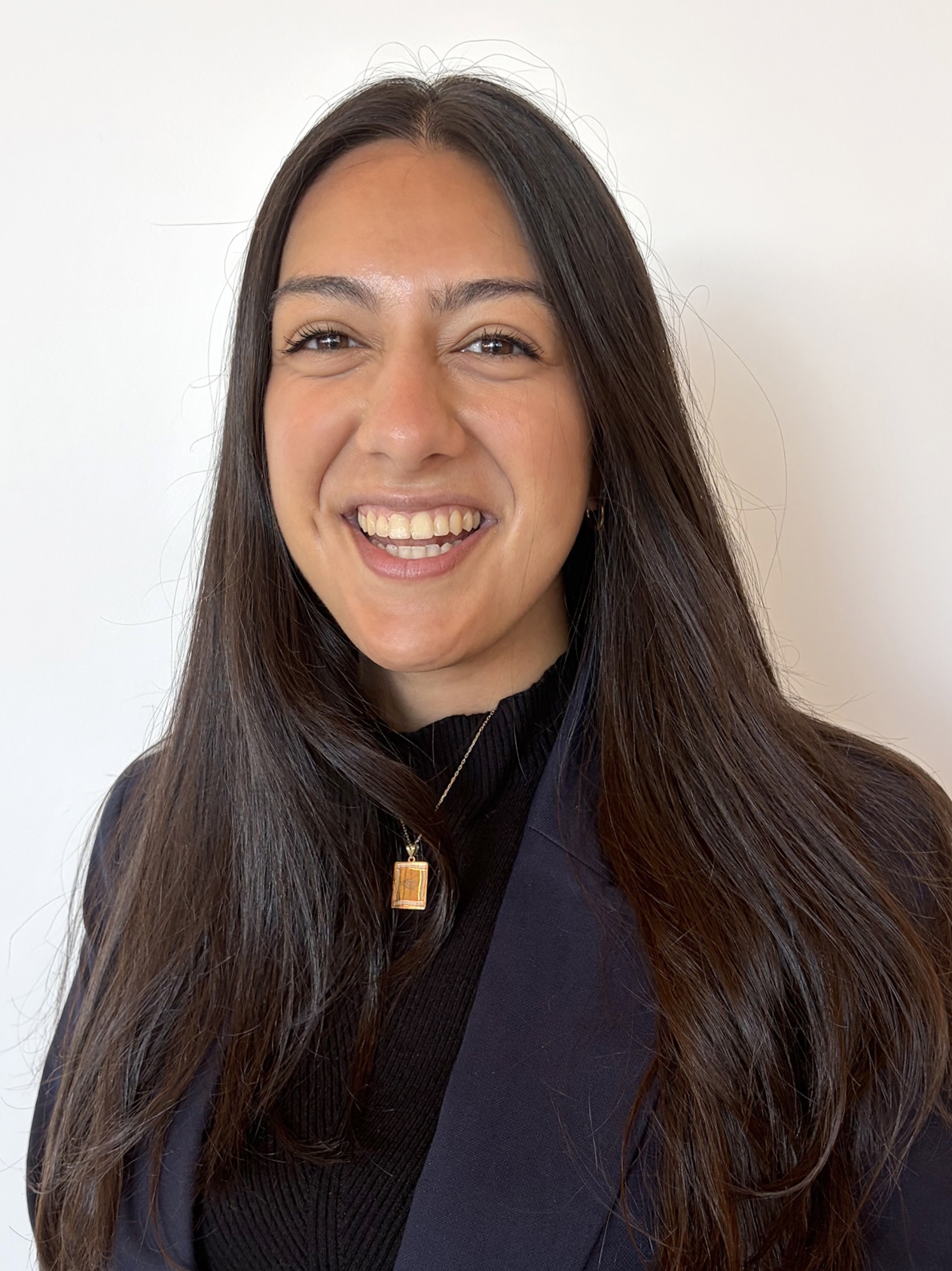
Tara Vafai Anand
I'm a Postdoctoral Fellow in the Department of Biomedical Informatics at Columbia University. I earned my PhD in Biomedical Informatics at Columbia University under George Hripcsak and Elias Bareinboim and previously graduated with honors from Barnard College ('20) with a degree in Computer Science and Middle Eastern & Asian Cultures. My research is in the area of causal inference, including theory and foundations, integration with connectionist AI, and applications with biomedical data in service of improving trustworthiness, ensuring safety, and advancing knowledge-discovery in biomedicine.
News
- New! 2026 I'm honored to have been awarded with the American Medical Informatics Association 2026 Edward H. Shortliffe Doctoral Dissertation Award.
- New! 2026 I have begun teaching a new course at Columbia Department of Biomedical Informatics titled Generating Real-World Evidence in Medicine.
- 2026 I successfully defended my dissertation titled Coarse Graphical Representations for Causal Inference with High-Dimensional Clinical Data.
- 2025 I will be co-hosting the tutorial Population-Level Effect Estimation: Applications to Generate Reliable Real-World Evidence at this year's Observational Health Data Science and Informatics (OHDSI) Global Symposium.
- 2024 I placed 2nd in the American Medical Informatics Association (AMIA) 2024 Student Paper Competition for my paper titled Leveraging Cluster Causal Diagrams for Determining Causal Effects in Medicine.
- 2023 I will be the new Graduate Assistant for the Barnard Computational Sciences Center's Computing Fellows Program.
- 2022 I am honored to have been selected for the 2023-2025 cohort of the Journal of the American Medical Informatics Associaiton (JAMIA) Student Editorial Board.
- 2022 I am co-organizng the workshop A Workshop to Build a Research Agenda for Justice Informatics at the AMIA 2022 Annual Symposium.
- 2020 I am honored to have been recognized with a 2020 Grace Lee Boggs Bold Award .
Representative Publications
- Causal Discovery over Clusters of Variables in Non-Markovian Systems NeurIPS-26. In press. Spotlight Presentation (<1%, out of 30,709 papers). [Link]
- Causal Discovery over Clusters of Variables in Markovian Systems NeurIPS-25. In Proceedings of the 39th Annual Conference on Neural Information Processing Systems. [Link]
- Leveraging Cluster Causal Diagrams for Determining Causal Effects in Medicine AMIA-24. In Proceedings of the 2025 Americal Medical Informatics Association Annual Symposium. 2nd Place Student Paper Competition (2 out of >60). [Link]
- Comparative safety and effectiveness of angiotensin converting enzyme inhibitors and thiazides and thiazide-like diuretics under strict monotherapy Journal of Clinical Hypertension, 2024. [Link]
- Causal Effect Identification in Cluster DAGs AAAI-23. In Proceedings of the Association for the Advancement of Artifial Intelligence Conference on Artificial Intelligence. [Link]
- Prevalence of Potentially Harmful Multidrug Interactions on Medication Lists of Elderly Ambulatory Patients BMC Geriatrics, 2021. [Link]
- Heterogeneity of Treatment Effects Across Nine Glucose-Lowering Drug Classes in Type 2 Diabetes: Extension of the LEGEND-T2DM Network Study. Diabetes, Obesity, and Metabolism, 2026. [Link]
- Accelerating real-world prediction and research in Alzheimer's: The M3AD study. Alzheimer's & Dementia, 2026. [Link]
- Developing and sustaining inclusive language in biomedical informatics communications: an AMIA Board of Directors endorsed paper on the Inclusive Language and Context Style Guidelines. Journal of the American Medical Informatics Association, 2025. [Link]
- Comparative Effectiveness of Second-Line Antihyperglycemic Agents for Cardiovascular Outcomes: A Multinational, Federated Analysis of LEGEND-T2DM. Journal of the American College of Cardiology, 2024. [Link]
Teaching
Teaching and mentorship are personal passions of mine and I've sought out opportunities to help train and guide those younger than myself at each stage of my career, most recently by developing and teaching a graduate level course, Generating Real-World Evidence in Medicine covering foundations in causal inference, observational study design in biomedical informatics, and leveraging tools of the OHDSI framework.
- Generating Real-World Evidence in Medicine (Graduate)
- Computing Fellows Program (Undergraduate)
- Computational Methods: Machine Learning for Healthcare (Graduate)
- Research Methods: Analysis for Large Scale Datasets (Graduate)
- Symbolic Methods: Symbolic AI for Healthcare (Graduate)
- Computing in Context: Health Policy and Management (Graduate)
- Big Data, Machine Learning, and Real-World Applications (Pre-College)
- Data Structures and Algorithms (Undergraduate)
- Introduction to Computer Science in Java (Undergraduate)
- Jumpstart for Aspiring Developers and Entrepreneurs (Undergraduate)
- Girls Who Code (Pre-College)
CV
Contact
You can reach me at tara[dot]v[dot]anand[at]columbia[dot]edu, or find me here: